

If you’re an IT software vendor trying to scale beyond direct sales, managed service providers are one of the most efficient routes to market available to you. MSPs already have the customer relationships, the technical credibility, and the recurring service model that makes them natural resellers and implementers of software like yours.
But working with MSPs effectively means understanding how they operate, what they actually want from vendor relationships, and how to build a program worth joining. This guide covers all of it.
What Is a Managed Service Provider?
A managed service provider is an IT company that delivers ongoing technology services to businesses under a subscription or retainer model. Rather than waiting for something to break, MSPs proactively manage their clients’ infrastructure, security, software, and support.
Their service portfolio typically includes network monitoring, endpoint management, cybersecurity, cloud infrastructure, helpdesk support, and increasingly, software procurement and management. That last point matters most to you as a vendor.
MSPs aren’t just service delivery organizations. They’re trusted advisors who influence, recommend, and often purchase software on behalf of their clients. When an MSP endorses your product, you gain access to their entire client base — not just one deal.
Why MSPs Matter for IT Vendors in 2026
Direct sales teams hit ceilings. Hiring more account executives to cover more territory is expensive and slow. MSPs offer a different model: one partner relationship that can generate multiple end-customer deals over time.
Here’s what makes MSPs particularly valuable as a go-to-market channel in 2026:
- Scale without headcount. A single MSP relationship can cover dozens of SMB clients across a region. You get distribution without proportional cost.
- Trusted buyer access. MSPs already have the ear of IT decision-makers. Your product enters the conversation as a recommendation, not a cold pitch.
- Recurring revenue alignment. MSPs run on subscription models. If your product fits their stack, they have strong incentive to keep renewing and expanding.
- Vertical depth. Many MSPs specialize in specific industries or geographies, giving you targeted reach into verticals that direct sales alone won’t penetrate efficiently.
For vendors generating $1M to $20M ARR and looking to scale, adding MSPs to the channel mix is one of the fastest ways to grow without proportionally growing the sales team.
How MSPs Evaluate Vendor Relationships
MSPs receive vendor pitches constantly. Most get ignored. Understanding what MSPs actually look for helps you build a program they’ll take seriously.
Margin and Compensation
MSPs run tight margins on services. When they add a software product to their stack, they need a clear financial return — competitive reseller margins, deal registration protection, and ideally recurring commission on renewals.
If your partner program doesn’t address margin upfront, you’ll lose MSPs to competitors who do.
Technical Fit and Ease of Delivery
MSPs evaluate software through a delivery lens. Can they deploy it efficiently? Does it integrate with the tools already in their stack — RMM platforms, PSA systems, security stacks? Is the onboarding burden reasonable?
Products that require heavy vendor involvement for every deployment are a poor fit for the MSP model.
Support and Enablement
MSPs need to support their clients, which means they need access to documentation, training, and a responsive vendor support channel. A partner portal with clear resources isn’t optional — it’s the baseline expectation.
Deal Protection
If an MSP brings you a deal and your direct sales team closes it without credit, that relationship ends. Deal registration and clear rules of engagement are non-negotiable for any serious MSP program.
Types of MSPs You Should Know
Not all MSPs are the same. Targeting the right type for your product saves time and improves conversion.
Generalist MSPs
These firms serve SMBs across multiple verticals with a broad service stack. They’re the most common type and often the easiest entry point for vendors — but also the most contested. Your product needs to fit naturally into their existing offerings.
Vertical-Focused MSPs
Some MSPs specialize in healthcare, legal, financial services, or manufacturing. If your product addresses compliance, data management, or industry-specific workflows, these partners offer highly targeted reach.
Security-Focused MSPs (MSSPs)
MSSPs focus on cybersecurity services. If your product touches identity, endpoint, SIEM, or threat detection, they’re a priority segment. They bring strong technical depth and clients who are actively spending on security.
Cloud MSPs
These partners are built around cloud infrastructure and migration. If your product is cloud-native or integrates with AWS, Azure, or Google Cloud, cloud MSPs can accelerate adoption significantly.
Building a Partner Program MSPs Will Actually Join
A partner program is not a PDF with a logo and a discount table. MSPs evaluate programs the same way they evaluate software: does this actually work for my business?
Start with Structure
Define your tiers clearly. Most programs use two to three tiers based on revenue, certifications, or deal volume, with distinct benefits at each level — higher margins, dedicated support, co-marketing funds, or priority deal registration.
Vague programs with undefined benefits don’t attract serious MSPs. They attract opportunistic ones who register a deal and disappear.
Build a Partner Portal
Your partners need a single place to register deals, access training, download sales materials, and track their pipeline. A partner portal is the operational backbone of the relationship.
If you’re managing partner activity through email threads and spreadsheets, you’re already losing partners to vendors who aren’t.
Automate Onboarding
The gap between a partner signing up and their first deal is where most programs leak. Automated onboarding sequences, product certifications, and clear activation milestones close that gap significantly.
Protect the Pipeline
Implement deal registration from day one. MSPs need to know that the deals they source are protected. Without it, you create a conflict between your direct team and your channel — and the channel loses every time.
How to Find and Recruit MSPs at Scale
Identifying the right MSPs is harder than it sounds. The market is fragmented. There’s no single directory that tells you which MSPs are actively looking for new vendor relationships, which ones already work with your competitors, and which ones serve the right client profile.
Manual research and cold outreach at scale is slow and inconsistent. Most channel managers spend more time building lists than actually recruiting.
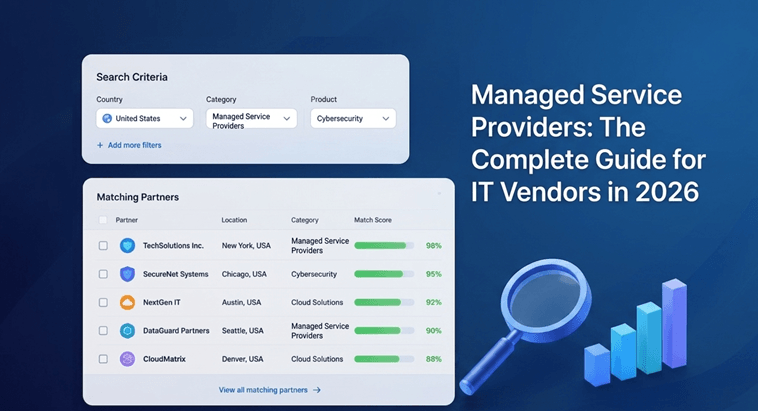
This is exactly the problem Elioplus is built to solve. The platform gives IT vendors access to a verified partner database covering 150-plus IT categories, filterable by location, expertise, and existing vendor partnerships. You can identify MSPs already working in your space and reach them through automated outreach — without building the process from scratch.
For vendors who want a fully done-for-you approach, the Partner Recruitment Automation product handles outreach on your behalf, so your channel manager can focus on conversations rather than prospecting.
Managing MSP Relationships After Recruitment
Recruiting an MSP is the beginning, not the result. The relationship only produces revenue if you keep partners engaged and supported after they sign up.
Track Partner Pipeline Visibility
One of the most common complaints from channel managers is having no idea what’s in their partner pipeline. Deals sit unregistered, conversations go cold, and performance is invisible until it’s too late.
A PRM platform gives you real-time visibility into deal registrations, partner activity, and pipeline health — so you can intervene early when a partner goes quiet rather than finding out at the end of the quarter.
Distribute Leads to Active Partners
If you’re generating inbound demand, routing qualified leads to active MSP partners is one of the fastest ways to increase engagement. Partners who receive leads from you have a direct financial incentive to stay active.
It also signals that you’re invested in their success, not just their commission check.
Run Tier Reviews Regularly
Tier management isn’t a set-and-forget exercise. Review partner performance quarterly. Promote partners who are hitting targets. Have direct conversations with those who aren’t. Inactive partners sitting in your top tier are a liability, not an asset.
What MSPs Want from Vendors in 2026
MSP expectations have shifted. In 2026, the baseline has moved.
- Faster onboarding. MSPs don’t have time for six-week enablement programs. They want to be productive in days, not months.
- Self-service resources. Strong documentation, video training, and a searchable knowledge base matter more than dedicated partner managers at the early stages.
- Transparent deal protection. Rules of engagement need to be written down, not verbal.
- Meaningful co-selling support. MSPs want vendors who show up for deals, not just for QBRs.
- Intent data and buyer signals. The most sophisticated MSPs are asking vendors for RFQ data and buyer intent signals to help them prioritize their own outreach.
That last point is worth noting. Elioplus provides MSPs with access to RFQs and intent data — high-priority buyer signals they can act on directly. For vendors, offering this kind of intelligence through your partner program is a real differentiator.
Common Mistakes IT Vendors Make with MSPs
Knowing what not to do saves you time and partner goodwill.
Treating MSPs like direct customers. MSPs are not end users. They need different pricing, different support structures, and different sales materials. Sending them the same deck you send to enterprise buyers signals that you don’t understand the channel.
Launching a program with no portal. Asking partners to email a shared inbox to register deals is not a program. It’s a process that will fail at scale.
Ignoring small MSPs. Many vendors focus exclusively on large regional MSPs and overlook the long tail. Smaller MSPs often have tighter client relationships and higher close rates on the deals they do pursue.
Recruiting without qualifying. Signing up 200 MSPs who never activate is not a win. Focus on fit: does this MSP serve the right client profile, in the right geography, with the right technical stack?
Competing with your own channel. If your direct team undercuts partner pricing or ignores deal registrations, your channel program will collapse. Enforce the rules of engagement consistently.
Getting Started: The Practical Path
If you’re building an MSP channel program from scratch in 2026, here’s a practical sequence:
- Define your ideal partner profile. What size MSP, what vertical focus, what geography, and what existing vendor relationships indicate a good fit?
- Build your program structure. Set tiers, define margins, and write down your rules of engagement before you recruit anyone.
- Set up a partner portal. Even a basic PRM with deal registration and a document library beats email. Elioplus offers a free PRM tier if you’re starting out.
- Recruit with precision. Use a verified partner database to identify MSPs that match your ideal partner profile rather than blasting generic outreach.
- Activate before you scale. Get your first ten partners to their first deal before you recruit the next hundred. Activation data tells you what’s working.
- Measure and iterate. Track deal registrations, time to first deal, and partner-sourced revenue. Use that data to improve onboarding and support.
FAQs
What is a managed service provider (MSP)? A managed service provider is an IT company that delivers ongoing technology services to businesses on a subscription or retainer basis. Services typically include network monitoring, cybersecurity, cloud management, helpdesk support, and software procurement.
Why should IT software vendors build an MSP channel program? MSPs give vendors access to multiple end customers through a single partner relationship. They’re trusted advisors to their clients, which means product recommendations carry weight. For vendors scaling beyond direct sales, MSPs offer distribution without proportional headcount growth.
What do MSPs look for in a vendor partner program? MSPs prioritize competitive margins, deal registration protection, a functional partner portal, strong technical documentation, and responsive vendor support. Programs that lack clear structure or deal protection rarely retain serious MSP partners.
How do you find MSPs to recruit as channel partners? You can identify MSPs through industry directories, trade associations, and partner databases filtered by location, expertise, and existing vendor relationships. Automated outreach tools reduce the manual effort of building and contacting lists at scale.
What is deal registration and why does it matter for MSPs? Deal registration is a formal process where an MSP submits a sales opportunity to the vendor for protection. It prevents the vendor’s direct team from competing on the same deal and gives the MSP confidence that their sourced opportunities are secure.
What is a PRM and do you need one to manage MSP partners? A Partner Relationship Management (PRM) platform manages the full partner lifecycle — onboarding, deal registration, lead distribution, and tier management. CRMs aren’t built for these workflows. A PRM gives you visibility into partner pipeline and keeps partners engaged through a structured portal experience.
How long does it take to build an active MSP channel program? With the right tools and a clear partner profile, you can go from zero to active partners in a matter of weeks. The bottleneck is usually partner activation, not recruitment. Structured onboarding and early lead distribution significantly reduce time to first deal.
Start Building Your MSP Channel Program
MSPs are one of the most efficient routes to market for IT software vendors. But the program you build determines the partners you attract and the revenue you generate from them.
Define your ideal partner profile, structure your program before you recruit, and use tools that remove the manual work from outreach and pipeline management. The vendors winning in the MSP channel in 2026 are the ones who treat partners as a strategic asset, not an afterthought.