
Most SaaS vendors hit the same wall. Direct sales get you to $2M ARR, maybe $5M. Then growth slows, the team is stretched, and competitors with reseller networks are closing deals in markets you haven’t touched. The answer is channel partner recruitment — but without a real system behind it, you’ll spend months signing partners who never sell anything.
This guide covers how to find the right partners, how to approach them, and how to build a recruitment process that actually scales.
Why Channel Partner Recruitment Fails for Most SaaS Vendors
The failure pattern is almost always the same: a vendor puts up a “become a partner” page, waits for inbound applications, signs a few enthusiastic MSPs or resellers, and then watches the pipeline stay flat.
The problem isn’t the partners but rather the process. Recruitment without targeting is just noise. Partners juggle dozens of vendor relationships at any given time. If your outreach doesn’t speak to their specific business model, vertical, or customer base, it gets ignored.
What separates vendors who build productive channel programs from those who don’t comes down to three things:
- They target partners by fit, not by volume
- They lead with a specific value proposition, not a generic pitch
- They have infrastructure ready before the first partner signs
Step 1: Define What a Good Partner Looks Like for Your Product
Before you send a single outreach message, build a partner profile. Think of it as the channel equivalent of your ICP.
Ask yourself: what type of partner actually sells to your target buyer? An MSP focused on SMB healthcare IT is a completely different business from a national VAR selling enterprise cybersecurity. Both might technically resell your product, but only one is worth pursuing if your product fits a specific segment.
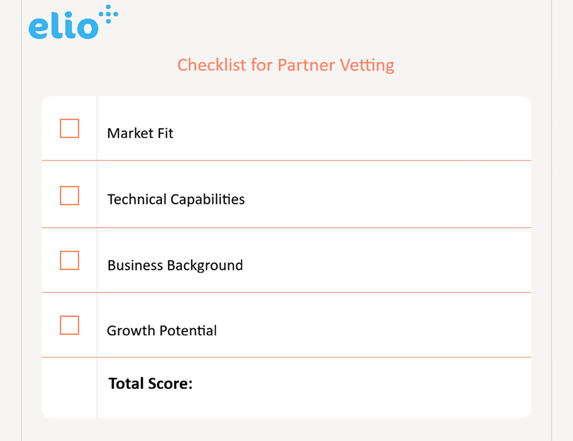
Key filters to define upfront:
- Geography: Where do you need coverage? Which markets are underserved by your direct team?
- Vertical expertise: Does the partner specialize in your target industries — healthcare, finance, manufacturing?
- Existing vendor relationships: Partners already selling complementary products are easier to activate than those with no adjacent experience
- Company size and capacity: A 5-person MSP and a 50-person regional reseller have very different sales motions and support needs
- Technical capability: If your product requires implementation, the partner needs the bench to deliver it
Skip this step and you’ll recruit partners who look good on paper but never generate revenue.
Step 2: Build Your Target List Using a Verified Partner Database
Cold-building a partner list from LinkedIn searches and Google is slow and unreliable. You end up with stale contacts, wrong titles, and companies that don’t match your criteria.
A verified, filterable partner database cuts through that. The Elioplus partner recruitment database covers 150-plus IT categories and lets you filter by location, existing vendor partnerships, and technical expertise. Instead of guessing, you search for MSPs and resellers who already match your profile and have a track record in your space.
This matters because partner recruitment is a numbers game with quality constraints. You need enough volume to generate real pipeline, but every contact on that list should have a plausible reason to care about your product.
Step 3: Craft Outreach That Speaks to the Partner’s Business
Partners don’t care about your product features. They care about whether adding you to their stack helps them win more customers, serve existing ones better, or earn more margin.
Your outreach needs to answer three questions immediately:
- Why is this vendor relevant to my business?
- What do I get out of this partnership?
- What does the vendor expect from me?
Keep the first message short. One paragraph on why you’re reaching out, one on the value to them — margin, leads, co-sell support, technical training — and a clear next step. No pitch decks in the first email.
Personalization matters more than volume here. A message that references the partner’s specific vertical or existing vendor relationships converts far better than a generic template blasted to 500 contacts.
What to Include in Your Partner Value Proposition
- Commission or margin structure
- Lead sharing or co-sell opportunities
- Onboarding and training support
- Marketing development funds, if applicable
- Deal registration protection
If you can’t answer these clearly, partners will ask — and vague answers lose deals. Get your program terms defined before outreach starts.
Step 4: Automate Outreach Without Losing Personalization
Manual outreach doesn’t scale. A channel manager sending individual emails can realistically contact 20 to 30 partners per week. That’s not enough volume to build meaningful pipeline.
Done-for-you recruitment automation handles the outreach communications while keeping messages targeted. Elioplus’s Partner Recruitment Automation identifies matching partners from the database and runs outreach sequences on your behalf, so your team focuses on conversations with interested prospects rather than building lists and writing follow-ups.
The key distinction from generic email automation is context. Outreach to cybersecurity MSPs needs different messaging than outreach to CRM resellers in EMEA. Automation that ignores this produces low response rates and damages your reputation with the partners you most want to work with.
Step 5: Capture Inbound Partner Interest You’re Already Missing
Not all partner recruitment is outbound. Some of your best potential partners are already visiting your website, reading your partner program page, and leaving without applying.
Inbound Partner Recruitment identifies these anonymous visitors and converts them into qualified partner leads. Instead of losing that intent signal, you get a contact you can follow up with directly.
This becomes especially valuable once your outbound program is running and generating awareness. Partners who see your outreach and then visit your site to research further are high-intent prospects. Capturing that visit closes a gap most vendors don’t even know exists.
Step 6: Have Your Partner Infrastructure Ready Before You Sign Anyone
Recruiting partners without a functioning partner program is one of the most common mistakes early-stage channel teams make. You get a partner excited, they ask how deal registration works, and you send them a spreadsheet. That’s usually the last you hear from them.
Before you activate recruitment at scale, you need:
- A partner portal where partners can register deals and access resources
- A clear onboarding process — not a 40-page PDF
- Deal registration that protects partners from channel conflict
- Lead distribution so partners receive qualified opportunities, not your leftovers
- Tier management if you plan to differentiate partner levels over time
A PRM handles all of this. If you’re early-stage and think you’re too small for one, Elioplus offers a free tier that covers the core workflows. There’s no reason to manage partner relationships in a CRM that was never built for channel dynamics.
Step 7: Prioritize Activation Over Recruitment Volume
Signing 50 partners means nothing if 45 of them never sell. Activation is where most channel programs stall.
It starts at onboarding. A partner who completes structured onboarding, receives their first qualified lead, and registers their first deal within 60 days is far more likely to become a consistent revenue contributor than one who signed an agreement and then heard nothing for three months.
Measure time-to-first-deal, not just partner count. That metric tells you whether your recruitment and onboarding process is actually working.
What to Avoid
A few patterns that consistently produce poor results:
Recruiting partners who already sell a direct competitor without a clear differentiation story. They won’t switch unless you give them a compelling reason.
Offering the same terms to every partner regardless of size or commitment. Tiered programs give high-performing partners a reason to prioritize you over the competition.
Using your CRM as a PRM. Salesforce and HubSpot can track partner contacts, but they don’t handle deal registration, partner portals, or co-sell workflows without significant customization that most SMB vendors can’t afford.
Treating partner recruitment as a one-time campaign. Your partner base churns. Partners get acquired, pivot verticals, or shift focus. Ongoing recruitment keeps your pipeline healthy.
Putting It Together
Channel partner recruitment is a process, not a project. The vendors who build productive partner networks treat it the same way they treat demand generation: defined targeting, repeatable outreach, clear messaging, and infrastructure that supports what they’re selling.
If you’re starting from zero or rebuilding after a failed first attempt, the fastest path is a verified partner database, automated outreach, and a PRM that’s ready before the first partner signs. Companies like SAP, Freshworks, TD SYNNEX, NTT DATA, and MassiveGRID use Elioplus to do exactly this — and more than 3,200+ IT vendors are already running their channel programs on the platform.
Start with the right targets, reach out with a message that speaks to their business, and have your program infrastructure in place. That’s the sequence that works.
FAQs
What is channel partner recruitment? Channel partner recruitment is the process of identifying, approaching, and signing MSPs, resellers, VARs, or distributors to sell your product on your behalf. It includes defining your ideal partner profile, building a target list, running outreach, and onboarding partners into your program.
How long does it take to recruit channel partners for a SaaS business? With a structured process and automated outreach, most vendors can identify and begin conversations with qualified partners within the first two to four weeks. Signing your first active partner typically takes four to eight weeks, depending on your program’s readiness and the partner’s sales cycle.
What’s the difference between a PRM and a CRM for managing partners? A CRM tracks contacts and pipeline. A PRM handles channel-specific workflows: deal registration, partner portals, lead distribution, tier management, and onboarding. Managing partners in a CRM creates gaps that frustrate partners and invite channel conflict.
How do I find MSPs and resellers to recruit as partners? The most efficient method is a verified partner database filtered by geography, vertical expertise, and existing vendor relationships. Building lists manually from LinkedIn or Google is slower and produces lower-quality data. Elioplus provides a filterable database covering 150-plus IT categories.
What should I include in a partner outreach message? Lead with why the partnership is relevant to their specific business, explain what they get — margin, leads, co-sell support, training — and make the next step clear. Keep it short. Partners receive plenty of vendor pitches. A message that references their vertical or existing vendor relationships performs significantly better than a generic template.
Do I need a PRM before I start recruiting partners? Yes, or at minimum a functioning partner portal with deal registration and onboarding workflows. Recruiting partners without infrastructure in place leads to poor activation rates. If cost is a concern, a free PRM tier covers the core workflows needed to support an early-stage partner program.
How do I measure whether my channel partner recruitment program is working? Track time-to-first-deal per partner cohort, activation rate (the percentage of signed partners who register at least one deal), and revenue attributed to the channel versus direct. Partner count alone is a vanity metric. Activation and pipeline contribution are the numbers that matter.