
Finding the right channel partner isn’t just about adding logos to your ecosystem; it’s about making sure your recurring revenue goals actually line up. In the B2B tech world, you need partners who speak fluently in ARR, ACV, and fast time-to-value rather than old-school, one-off license sales. It is all about finding that sweet spot where their ideal customer profile directly matches yours, and where their customer success teams are built to fight churn just as hard as you do.
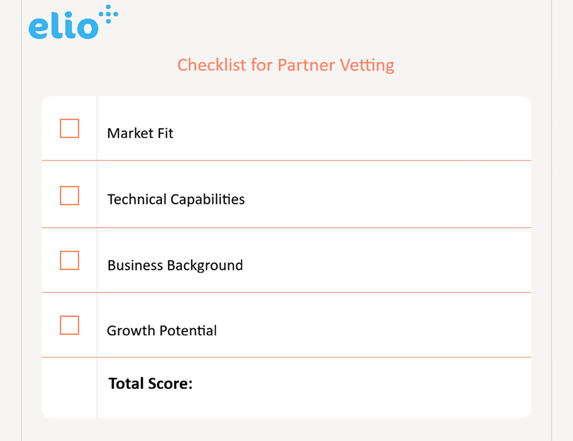
To find the high-performers, channel managers should take into account several factors like market alignment, technical skills, and marketing execution. Using a weighted scorecard helps strip away the guesswork by grading candidates on everything from their API integration skills to their actual marketing engine. By quantifying these metrics upfront, you protect your margins, avoid messy portfolio conflicts, and ensure you are only investing time in partners ready to scale alongside your software.
Market Alignment
All criteria when evaluating a potential partner are important but on the top of the list is market alignment. For your relationship with your partners to work and produce results there should be a clear fit on ICP, market & product experience and off course location.
Target Market Fit: Target market fit ensures your partner already has trusted relationships with the exact buyers you want to reach, saving you months of cold outreach. Aligning on an Ideal Customer Profile (ICP) prevents wasted sales cycles on leads that are too small or irrelevant to derive value from your SaaS platform. When there is good fit between your ICP and your partner’s customer base you secure faster deployments, higher retention, and predictable recurring revenue.
Vertical Expertise: Vertical expertise gives partners immediate credibility because they already understand the specific regulatory, compliance, and operational pain points unique to that industry. This deep domain knowledge allows them to position your SaaS solution as a critical business necessity rather than just another optional software tool. Partners with vertical alignment speak the customer’s language, resulting in shorter enterprise sales cycles and significantly higher adoption rates.
Solution Selling Capabilities: Solution selling capabilities ensure partners can position your SaaS platform as a strategic decision for complex business ecosystems, rather than just pitching individual product features. This consultative approach allows them to unlock higher contract values, navigate corporate decision-makers, and build long-term value that keeps customer churn low.
Geographic Coverage: Geographic coverage allows you to rapidly enter new regions by leveraging a partner’s established local network, language fluency, and understanding of regional business cultures and regulations. It also ensures your end users receive timely, localized support and compliant billing practices within their specific time zones and jurisdictions.
Technical Capabilities
Except from the business aspects, your potential partners should also be capable and have or acquire the necessary skills to support your solution after the sale. Depending on the complexity of your solution or the access you are able to provide, there are different capabilities your partners should hold.
Certified Talent: Certified talent ensures the partner has the verified technical expertise to deploy, configure, and troubleshoot your SaaS platform without draining your internal support resources. This hands-on capability builds immediate trust with enterprise clients, resulting in smoother implementations and fewer onboarding delays that could otherwise risk early customer churn.
Complementary Stack: A complementary stack means your SaaS platform seamlessly fits into the partner’s existing product bundle, creating immediate cross-sell opportunities with customers who already trust their ecosystem. It also ensures smoother technical workflows, allowing the partner to deliver a complete, high-value solution rather than a fragmented tool that requires constant custom integration.
Managed Services Capability: Managed services capability ensures the partner can provide ongoing, front-line technical support, protecting your internal engineering teams from handling basic daily maintenance tickets. It also allows the partner to wrap proactive monitoring and optimization around your SaaS platform, driving deeper user adoption and securing steady renewal rates
Implementation Experience: Implementation experience ensures the partner can successfully navigate complex corporate environments, mitigating project delays and hidden deployment bottlenecks that frustrate new clients. This proven track record gives enterprise buyers confidence, accelerating your platform’s time-to-value and safeguarding your recurring revenue from day one.
Growth Potential
For more mature partner programs, the growth potential for each partner is equally significant with the market alignment and tech capabilities. Your best performing partners can add up to 80% of your total indirect revenues, therefore onboarding such businesses to your network can have a tremendous impact to your growth.
Executive Buy-In: Executive buy-in ensures that the partner’s leadership prioritizes your SaaS platform, dedicating the necessary budget, headcount, and mindshare to hit joint revenue targets. Without this top-down commitment, your partnership risks becoming a low-priority initiative that gets sidelined whenever the partner faces resource constraints or shifting internal strategies.
Proactive Marketing: Proactive marketing on the partner side ensures they generate their own pipeline for your SaaS platform rather than passively waiting for you to hand them fresh leads. This self-sufficient demand engine accelerates pipeline velocity and scales your market reach without constantly draining your internal marketing resources.
Co-Investment Willingness: Co-investment willingness ensures that your partners are financially committed to actively marketing and scaling your SaaS platform. By pooling resources through shared funding or matching the Market Development Funds (MDFs) they receive, both companies double their market impact while keeping lead generation costs highly efficient for your internal budget.
Low Conflict Risk: Low conflict risk ensures the partner’s sales reps have minimal overlap when they position your SaaS platform without competing against identical solutions already sitting in their own product portfolio. Minimizing this overlap builds deep mutual trust, preventing awkward territorial disputes over accounts and keeping the partner entirely focused on winning market share for your brand.
SaaS Partner Vetting Scorecard
In order to help you create your ideal partner profile, you can utilize the scorecard below to evaluate each partner for faster and better qualification.
Rate candidates on a scale of 1–5 for each criterion (1 = Poor, 5 = Elite).
| Category | Vetting Criterion | Weight | Score (1-5) | Weighted Score |
| Market Fit | Ideal Customer Profile (ICP) Overlap | 15% | ||
| Existing ARR/SaaS Sales Mindset | 10% | |||
| Technical | Integration & API Capabilities | 15% | ||
| Implementation & Customer Success Team | 15% | |||
| Business | Financial Runway for Long Sales Cycles | 10% | ||
| Low Portfolio Conflict (Competitor Products) | 10% | |||
| Growth | Executive Commitment & Mindshare | 15% | ||
| Inbound Lead Generation/Marketing Engine | 10% | |||
| TOTAL | Minimum passing score: 3.8 / 5.0 | 100% |
Conclusion
Building a high-performing SaaS channel ecosystem requires moving past surface-level agreements and strictly vetting partners on technical alignment, operational capability, and mutual business growth. By utilizing a rigorous evaluation framework, channel managers can confidently filter out passive partners and select those capable of accelerating enterprise time-to-value. Including in your selection process these core criteria replace the spray and prey strategy with a predictable, scalable strategy that protects your margins and secures long-term recurring revenue.
Partner Recruitment in Autopilot
Selecting the correct partner profile that aligns with your business goals, searching through databases, public records, social media, forums, and attending events among other initiatives to grow your partner network can be a very time-consuming process. Instead of working on trivial tasks, our partner recruitment solutions can help you gain your time back and focus only on building fruitful business relationships.
Having worked with more than 450+ IT software, SaaS and hardware vendors, we have the experience whether you are just starting to build your partner program or if you’re in growth mode and looking to scale your network.