
Most IT vendors hit the same wall eventually. Direct sales carry you to a point, then growth slows and the cost of adding quota-carrying reps starts to outpace the return. A partner ecosystem is how you break through that ceiling — but only if you treat it as a structured program, not a loose collection of relationships tracked in a spreadsheet.
This guide covers every stage: defining what you want from a partner ecosystem, finding and recruiting the right partners, structuring the program, and managing it in a way that generates pipeline without needing a channel manager in every region.
What a Partner Ecosystem Actually Means for IT Vendors
A partner ecosystem is the network of external companies — MSPs, resellers, distributors, system integrators, and technology alliances — that sell, implement, or extend your product on your behalf. For an IT vendor, this is your indirect sales motion.
Done well, it multiplies your reach without multiplying your headcount. A reseller in the Philippines closes deals you’d never have sourced directly. An MSP in India bundles your software into their managed service offering and brings you recurring revenue from accounts you didn’t know existed.
The goal isn’t to collect partners. It’s to build a network of active, productive ones who generate consistent pipeline.
Step 1: Define What You Need Before You Recruit Anyone
Before you approach a single MSP or reseller, get clear on what you actually need from a partner. Vague goals produce vague results.
Ask yourself:
- What geographies do you want to enter? If you’re expanding into India, Pakistan, or Egypt, you need partners with real local presence and existing customer relationships — not just partners willing to try.
- What partner type fits your product? A cybersecurity platform typically moves through MSSPs and resellers. A SaaS productivity tool might fit better with MSPs who bundle software into monthly service packages. Match the partner type to your sales motion.
- What does a productive partner look like in 12 months? Put a number on it: three deals closed, $50K in influenced pipeline, five new accounts. Vague expectations lead to inactive partners.
- What can you offer? Margin, co-sell support, deal registration protection, MDF, technical enablement. Partners evaluate your program against others they already run. If you can’t articulate your value proposition clearly, you won’t recruit the right people.
Document these answers before you build anything else. They become the foundation of everything that follows.
Step 2: Identify the Right Partners
Filter by location, expertise, and existing partnerships
The most useful filters when searching for channel partners are:
- Geography: Where do you need coverage? Be specific, not just “Asia” but India, the Philippines, or Malaysia.
- Technical expertise: Does the partner have demonstrated experience in your product category? An MSP specializing in networking infrastructure is a different fit than one focused on cloud productivity.
- Existing vendor relationships: A partner already reselling a complementary product in your category is pre-qualified. They have the customer base, the billing relationships, and the technical capability. You’re asking them to add one more line, not build a new practice from scratch.
Platforms like Elioplus maintain a verified database of MSPs, resellers, and distributors across 50-plus countries, filterable by all three dimensions. That kind of structured search replaces weeks of manual prospecting with a targeted list you can act on immediately.
Don’t ignore inbound signals
Some of your best future partners are already visiting your website. They’re researching your product, reading your partner program page, and leaving without converting. Inbound partner recruitment tools can identify those anonymous visitors and surface them as warm leads — far higher intent than cold outreach.
Step 3: Build a Recruitment Process, Not a One-Time Campaign
Recruiting partners isn’t a launch event. It’s an ongoing motion. The vendors who build strong ecosystems treat recruitment the same way they treat sales pipeline: with a defined process, regular outreach, and clear conversion goals.
Outreach at volume requires structure
Reaching out to 200 potential partners manually isn’t realistic without a dedicated channel manager. Automated outreach sequences — personalized to each partner’s geography, expertise, and existing vendor relationships — let you run recruitment at scale without proportional headcount.
Qualify before you onboard
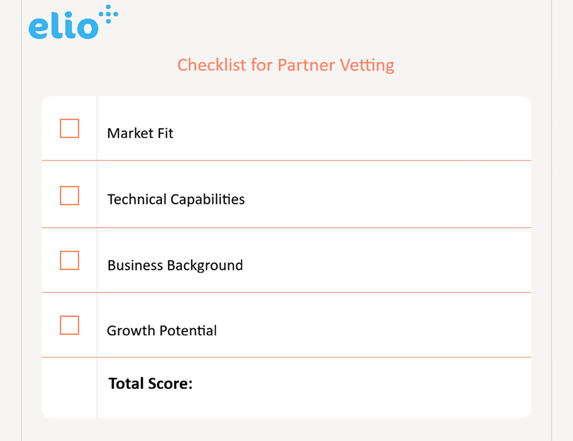
Not every partner who responds is worth onboarding. A quick qualification call should confirm:
- They have active customers in your target segment
- They have the technical capability to support your product
- They’re willing to commit to a minimum activity level — even one deal per quarter is a starting point
- Onboarding a partner who goes dark costs you time and creates noise in your reporting. Set a low bar, but set one
Step 4: Structure the Program Before You Need It
The minimum viable partner program includes:
- Partner agreement: Clear terms on deal registration, margin, and support obligations
- Onboarding materials: Product training, competitive positioning, and sales playbooks in a format partners can actually use
- Deal registration: A way for partners to register opportunities so they’re protected from channel conflict
- A named contact: Even if it’s the founder or a sales lead, partners need one person to cal
Tier structure for when you’re ready
Once you have 10 or more active partners, a simple two-tier structure — Registered and Certified, or Silver and Gold — gives you a way to reward productive partners and create an incentive to perform. Keep the criteria simple: revenue generated, certifications completed, or deals closed in the past 12 months
Step 5: Manage Partners in a System, Not a Spreadsheet
A spreadsheet is where partner programs go to die. You lose track of who’s active, deal registrations get missed, and you have no real visibility into which partners are generating pipeline.
A PRM (Partner Relationship Management) platform solves this. At minimum, you need:
- A partner portal where partners can register deals, access materials, and track their pipeline
- Deal registration with conflict resolution built in
- Onboarding workflows so new partners don’t fall through the cracks
- Reporting that shows you who’s active and who’s gone quiet
You don’t need to spend $50,000 a year on enterprise software to get there. Elioplus offers a free PRM tier that covers the core functionality a growing partner program needs, with paid tiers that add automation, lead distribution, and deeper reporting as the program scales.
Step 6: Feed Partners Leads, Not Just Collateral
The fastest way to activate a passive partner is to send them a qualified lead. Partners who receive leads from vendors close deals faster and stay engaged longer than those left to source everything themselves.
Two mechanisms work well here:
- RFQs and intent data: Surface high-intent buyers in your target market and route them to the right partner based on geography and expertise. The partner gets a warm opportunity; you get a deal moving through an indirect channel.
- Co-sell support: For larger deals, join the partner on calls, provide technical resources, and help close. It builds trust and shows the partner you’re invested in their success.
Partners who receive leads become your most active partners. Partners who receive only marketing materials tend to go dark within 90 days.
Step 7: Measure What Matters
A partner ecosystem that’s actually working is measurable. Track these metrics from the start:
- Recruited vs. active partners: What percentage of your partner base registered a deal in the last 90 days?
- Partner-sourced pipeline: What revenue in your CRM originated from a partner?
- Time to first deal: How long does it take a newly onboarded partner to close their first opportunity? Shortening this is the highest-leverage activity in partner enablement.
- Partner retention: Are partners renewing their agreements and staying active year over year?
These four numbers tell you whether your ecosystem is generating real business or just growing in headcount without producing results.
Common Mistakes to Avoid
Recruiting too broadly. Fifty inactive partners is worse than ten active ones. Focus on quality and fit before volume.
Skipping deal registration. Channel conflict kills partner programs. If two partners are working the same account and neither is protected, both will stop trusting you.
Treating onboarding as a one-time event. Partners need reinforcement — updated training when your product changes, new competitive positioning when the market shifts, and regular touchpoints to stay engaged.
Waiting until you have 20 partners to implement a PRM. Set up the system before you need it. Migrating partner data from a spreadsheet after the fact is painful and creates gaps in your history.
Building a partner ecosystem is a long-term investment, but the compounding effect is real. A well-run indirect channel generates pipeline in markets you can’t reach directly, at a cost structure that scales far better than adding sales headcount.
If you’re starting your first channel program — or formalizing one that’s been running on spreadsheets, Elioplus gives you the tools to recruit, onboard, and manage partners in one place: a verified database of active MSPs and resellers across 50-plus countries, plus a full PRM with a free entry point.