

What Is Channel Sales? A Complete Guide for B2B Technology Companies in 2026
Channel sales is one of the most effective ways for B2B technology companies to grow revenue without growing headcount at the same pace. Instead of building out a massive direct sales team, you sell through third parties — resellers, managed service providers (MSPs), distributors, and system integrators — who already have the customer relationships you’re trying to reach.
But channel sales isn’t just handing off your product to a partner and waiting for deals to come in. Done well, it’s a structured go-to-market motion with clear economics, defined partner roles, and active management. Done poorly, it’s a pile of signed agreements that never produce a single closed deal.
This guide covers what channel sales actually means for B2B tech companies, how it differs from direct sales, what the main partner types look like, and how to build a program that generates consistent results.
What Channel Sales Means
Channel sales is a distribution model where a company sells through external partners rather than directly to end customers. Those partners act as an extension of your sales force — bundling your product with their own services, reselling it, or recommending it as part of a broader solution.
For technology companies, that typically means working with partners like:
- MSPs (Managed Service Providers): Companies that manage IT infrastructure for small and mid-sized businesses, often reselling software and hardware as part of their managed services stack.
- VARs (Value-Added Resellers): Partners who purchase your product and resell it, usually with implementation, customization, or support layered on top.
- Distributors: Larger intermediaries who buy in volume and sell to a network of smaller resellers — useful when you need geographic or market coverage at scale.
- System Integrators: Firms that build complex IT environments for enterprises, selecting and implementing multiple vendor products as part of a larger engagement.
- Referral or Affiliate Partners: Organizations or individuals who pass leads your way in exchange for a commission, without handling the sale directly.
Each type plays a different role in your go-to-market strategy, and most channel programs include more than one.
Channel Sales vs. Direct Sales
With direct sales, your own team owns the entire process — prospecting, qualification, demo, negotiation, close. Channel sales introduces a third party into that flow.
The tradeoff is fairly simple. Direct gives you more control and typically higher margins per deal. Channel gives you reach and speed. A single partner with 500 existing customer relationships can open doors that would take your direct team years to build on their own.
For most B2B tech companies, the right answer is both. Mature technology vendors typically run a hybrid model: direct sales for enterprise accounts and strategic deals, channel for the mid-market and SMB segments where partner relationships dominate.
That said, the tension between direct and channel is real. When your sales team and your partners are chasing the same deals, you create channel conflict — and nothing kills partner motivation faster. Managing that boundary clearly is one of the core disciplines of running a channel program.
Why Channel Sales Works for Technology Companies
Technology products, especially software, usually require explanation, integration, and ongoing support. Buyers don’t just want the product — they want help deploying it, training their team, and troubleshooting when things go wrong. That’s exactly what MSPs and VARs provide.
When a partner already has a trusted relationship with a customer, your product gets introduced with built-in credibility. The partner vouches for it. That shortens sales cycles and sidesteps the skepticism a cold vendor outreach would typically face.
Channel sales also lets you enter new markets — geographies, verticals, customer segments — without the overhead of hiring local teams. A well-chosen regional partner already knows the market, speaks the language, and has the relationships.
From a cost structure standpoint, channel sales shifts a meaningful portion of customer acquisition cost to partners. You pay commissions or margins rather than salaries and benefits. At scale, that can make your unit economics considerably more attractive.
The Core Components of a Channel Program
A channel program isn’t just a partner agreement and a product brochure. The programs that generate consistent revenue have several components working together.
Partner Tiers and Incentives
Most programs use a tiered structure — Gold, Silver, Bronze, or similar — where partners earn better margins, more support, and exclusive benefits as they sell more or meet certification requirements. Tiers create healthy competition and give partners a clear path to getting more out of the relationship.
Enablement and Training
Partners can only sell what they understand. Enablement means product training, sales playbooks, demo environments, and certification programs. The more confident a partner is in your product, the more actively they’ll position it.
Marketing Development Funds (MDF)
MDF is budget you provide to partners for co-marketing activities — events, campaigns, webinars, paid ads. It’s a practical way to extend your marketing reach through partners who know their local markets better than you do.
Deal Registration
A deal registration system lets partners claim a specific opportunity, protecting them from competing with your direct team or other partners on the same deal. It reduces channel conflict and gives partners a reason to bring opportunities to you early.
Partner Relationship Management (PRM)
Once your partner network grows, managing it through spreadsheets and email threads becomes unworkable. A PRM platform centralizes partner onboarding, training, deal registration, performance tracking, and communication in one place.
How to Recruit the Right Channel Partners
Partner recruitment is where most channel programs run into trouble. It’s tempting to sign as many partners as possible, but a large roster of inactive partners creates noise without revenue. The goal is a focused network of partners who are genuinely motivated to sell your product.
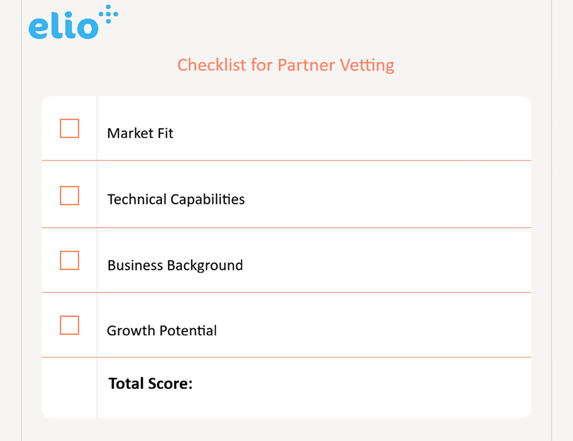
Start by defining your ideal partner profile. What size of company? What verticals do they serve? What products are already in their stack, and does your product complement them? What does their customer base look like?
Then find partners who match that profile. Industry events, LinkedIn outreach, referrals from existing partners, and purpose-built platforms with verified partner databases are all viable paths.
Elioplus is built specifically for this. IT vendors can search a verified database of MSPs, resellers, and distributors, filter by geography and specialization, and automate outreach to potential partners — removing much of the manual work from the recruitment process.
Once you’ve identified candidates, the conversation should focus on mutual fit. What’s in it for the partner? How does your product make their business more competitive or profitable? Partners respond to clear economics and genuine support — not just commission percentages.
Managing Partners After Recruitment
Signing a partner agreement is the beginning, not the end. The partners who actually produce revenue are the ones you actively support, communicate with, and invest in.
Regular check-ins, clear performance expectations, and fast responses to partner questions all matter. So does making it easy to do business with you — simple deal registration, responsive technical support, and marketing assets they can put to use right away.
Tracking performance is equally important. Which partners are active? Which have registered deals but haven’t closed them? Which have gone quiet? A PRM platform gives you visibility into these patterns so you can step in before a partner goes dormant.
Common Mistakes B2B Tech Companies Make with Channel Sales
Recruiting too broadly. Two hundred partners who are vaguely interested is worth far less than twenty who are deeply committed. Focus on quality over volume.
Under-investing in enablement. Partners won’t prioritize your product if they don’t feel confident selling it. Training and support aren’t optional extras.
Ignoring channel conflict. When your direct team and your partners are competing for the same deals, partners lose motivation fast. Define rules of engagement clearly and hold to them.
Treating partners as passive resellers. The best channel relationships are collaborative. Partners who feel like genuine business partners — not just a distribution outlet — perform significantly better.
Measuring the wrong things. Revenue is the obvious metric, but tracking pipeline by partner, deal velocity, and partner engagement gives you earlier signals about what’s actually working.
Building a Channel Sales Strategy That Scales
A scalable channel program starts with a clear value proposition for partners — not just for customers. Why should an MSP or reseller prioritize your product over the dozens of other vendor relationships they’re already managing?
From there, the fundamentals are consistent: recruit selectively, enable thoroughly, support actively, and measure honestly. As the program matures, you’ll identify your top performers and start to understand what makes them successful — then use those patterns to recruit and develop similar partners.
Technology makes this more manageable. Platforms designed for partner recruitment and management remove the manual overhead that slows programs down and give you the data to make better decisions. For IT vendors building or scaling a channel program, Elioplus provides 3 different types of partner recruitment solutions to find partners based on your needs, automate outreach, and manage relationships in one place.
FAQs
What is channel sales in simple terms? Channel sales is when a company sells its products through third-party partners — like resellers, MSPs, or distributors — rather than directly to end customers. The partners handle part or all of the sales process in exchange for a margin or commission.
How is channel sales different from direct sales? Direct sales means your own team sells to customers. Channel sales means external partners sell on your behalf. Direct gives you more control; channel gives you scale and reach. Most B2B tech companies use both.
What types of partners are common in B2B technology channel sales? The most common types are MSPs, VARs, distributors, system integrators, and referral partners. Each plays a different role depending on your product and target market.
How do I find channel partners for my technology product? Industry events, LinkedIn, referrals from existing partners, and platforms like Elioplus — which provides access to a verified database of MSPs, resellers, and distributors with filtering by geography and specialization — are all solid starting points.
What is a PRM platform and why does it matter? A PRM (Partner Relationship Management) platform is software that helps you manage your partner network — handling onboarding, training, deal registration, performance tracking, and communication in one place. It becomes essential once your partner network grows beyond a handful of relationships.
What is channel conflict and how do you avoid it? Channel conflict happens when your direct sales team and your channel partners compete for the same deals. You avoid it by defining clear rules of engagement — which accounts or segments are handled directly versus through partners — and enforcing those rules consistently.
How do you measure the success of a channel sales program? Key metrics include revenue by partner, pipeline generated through the channel, deal close rates, partner activity levels, and time-to-first-deal for new partners. Tracking engagement alongside revenue gives you earlier warning signs when something isn’t working.
Channel sales rewards the companies that treat it as a real go-to-market discipline, not an afterthought. Start with the right partners, invest in making them successful, and build the infrastructure to manage relationships at scale. That’s how technology companies turn a partner network into a genuine growth engine.