
- What RFQs Actually Mean for MSPs
- What Intent Data Adds on Top
- Why Most MSPs Aren’t Using Either Effectively
- How to Build a Working RFQ and Intent System in 2026
- Step 1: Get into the right networks
- Step 2: Enrich before you reach out
- Step 3: Prioritize by signal strength and fit
- Step 4: Respond fast and specifically
- Step 5: Track what converts
- Combining RFQs with Vendor Discovery
- The Speed Advantage Is Real
- FAQs
Most managed IT service providers spend too much time chasing cold prospects. You send outreach, wait, follow up, repeat – often with little to show for it. The problem isn’t effort. It’s timing. You’re reaching buyers before they’re ready, or missing them entirely when they are.
RFQs and intent data change that equation. Instead of guessing who might need your services, you get signals from buyers who are actively looking. Here’s how managed IT service providers can use both to build a more efficient, higher-converting sales pipeline in 2026.
What RFQs Actually Mean for MSPs
A request for quote is a direct signal from a business that has a defined need and wants pricing or a proposal. For MSPs, these aren’t abstract marketing leads. They’re buyers who have already decided to buy something – they just haven’t decided from whom.
The practical value is straightforward: you spend less time qualifying and more time closing. An RFQ tells you the buyer’s vertical, the service category they need, their timeline, and sometimes their budget range. That’s more context than most cold outreach ever generates.
The challenge is access. RFQs don’t land in your inbox automatically. They circulate through platforms, vendor networks, and partner ecosystems – and if you’re not plugged into those channels, you miss them.
What Intent Data Adds on Top
Intent data goes a layer deeper. Where an RFQ is explicit (“we need managed security services”), intent data is behavioral. It captures signals like which companies are researching specific IT categories, which decision-makers are consuming content about cybersecurity or ITSM solutions, and which businesses are showing buying patterns before they ever fill out a form.
For MSPs, intent data answers a question RFQs can’t: who is about to become a buyer?
Used well, it lets you prioritize outreach around companies already in an active research phase. You reach them before the RFQ goes out – which means you’re not competing against five other proposals on day one.
Why Most MSPs Aren’t Using Either Effectively
The gap isn’t awareness. Most MSPs know these tools exist. The gap is execution.
Common problems include:
- Fragmented data sources. Intent signals come from multiple platforms and rarely consolidate in one place, leaving you with partial pictures.
- No lead enrichment. A company name and a signal isn’t enough. You need the right contact, a verified email, and enough context to write a relevant first message.
- Slow follow-up. Intent data has a short shelf life. A buyer researching cybersecurity solutions today may have made a decision within two weeks. Delayed outreach is wasted outreach.
- No prioritization system. Without a way to score incoming signals, everything looks equally urgent – which means nothing gets acted on fast enough.
These aren’t technology problems. They’re workflow problems. The right platform solves them by combining the data with the tools to act on it.
How to Build a Working RFQ and Intent System in 2026
Step 1: Get into the right networks
RFQs don’t find you – you find them. That means being present in the vendor ecosystems and partner networks where buyers post requirements. If you’re an MSP working across cybersecurity, ITSM, or data management, you need to be registered with vendors in those categories who distribute leads and RFQs to their partner base.
Elioplus gives MSPs direct access to RFQs and high-intent buyer signals through its platform. Rather than hunting across disconnected channels, you get a feed of relevant opportunities filtered by category and geography. Sign up at elioplus.com to see what’s currently available in your market.
Step 2: Enrich before you reach out
An RFQ or intent signal is a starting point, not a finished lead. Before you contact anyone, you need the right decision-maker – IT Director, CTO, or Operations Manager depending on company size – a verified email address, and enough company context to personalize your message.
The Customer Acquisition Suite in Elioplus handles this for MSPs. It provides lead enrichment, visitor
identification, and verified email contacts so you’re not sending generic outreach to a generic inbox.
Step 3: Prioritize by signal strength and fit
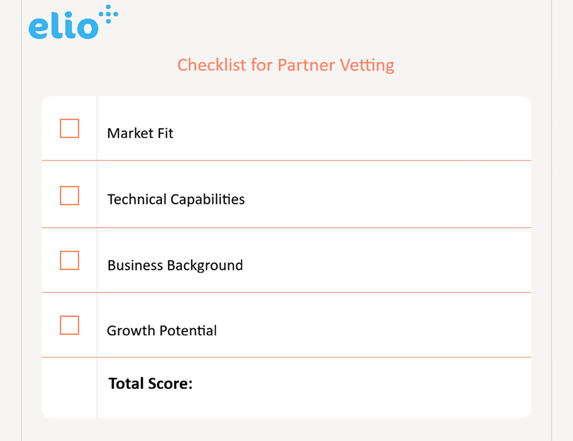
Not every RFQ is worth pursuing. Score incoming opportunities by fit (does the buyer’s vertical, size, and location match your service model?), signal strength (is this an explicit RFQ or a softer behavioral signal?), and competition (how many other MSPs are likely seeing this same lead?).
Build a simple scoring system – even a spreadsheet works at first – so your team knows which leads get same-day outreach and which go into a nurture sequence.
Step 4: Respond fast and specifically
Generic proposals lose. When you respond to an RFQ or reach out based on intent data, your message needs to reflect what you actually know about the buyer’s situation. If the RFQ is for managed endpoint security, don’t send a brochure about your full service catalog. Address the specific need, cite relevant experience, and make the next step frictionless.
Speed matters here. Being the first credible responder to an RFQ significantly improves your close rate. Same-day response to high-fit signals should be standard operating procedure, not an aspiration.
Step 5: Track what converts
Most MSPs don’t close the loop on which signals produced revenue – which makes it impossible to improve. Track every RFQ and intent-sourced lead from first contact through close, and review monthly. Which categories produce the most qualified leads? Which signals convert fastest? Where are you losing deals after the first meeting?
That data shapes your vendor relationships, your service positioning, and how you allocate time across lead sources.
Combining RFQs with Vendor Discovery
One underused move for MSPs: use intent data not just to find customers, but to find the right vendor partners. If you’re seeing consistent RFQs in a category where you don’t have a strong vendor relationship, that’s a signal to go find one.
Elioplus’s Company Search and Directory covers 150-plus IT categories including cybersecurity, ITSM, CRM, and data management. You can browse vendor partner programs, see what categories they cover, and apply to become a reseller or referral partner – all in the same platform where you’re tracking customer leads.
This matters because the strongest MSPs in 2026 aren’t just service providers. They’re channel partners for vendors whose products they sell and support. That dual role creates recurring revenue, deal registration benefits, and more lead flow from the vendor side.
The Speed Advantage Is Real
Intent data degrades fast. A business researching ITSM solutions today is likely talking to vendors within a week and building a shortlist within two. If you’re running a 10-day response cycle, you’re consistently showing up after the decision is already forming.
The MSPs winning the most new business in 2026 treat high-intent signals like inbound calls: same-day response, a specific message, and a clear next step ready to go. That discipline, combined with a reliable source of RFQs and intent data, compounds into a predictable pipeline over time.
FAQs
What is an RFQ in the context of managed IT services? An RFQ (request for quote) is a formal or semi-formal signal from a business that needs IT services and wants pricing or a proposal. For MSPs, RFQs represent buyers already in an active purchase process – making them higher-priority leads than cold prospects.
How is intent data different from a standard lead list? A lead list gives you contact information. Intent data tells you which companies are actively researching a specific topic or service category right now. It’s behavioral, not static, which means it reflects current buying activity rather than past attributes.
How quickly should MSPs respond to RFQs? Same-day response to high-fit RFQs is the standard worth targeting. Intent data has a short shelf life – buyers move fast, and being the first credible responder meaningfully improves your win rate.
Can small MSPs use intent data effectively, or is it only for larger teams? Small MSPs can use it effectively, but they need to be selective. Prioritize signals that match your service model tightly and focus on fast, specific outreach rather than volume. A five-person MSP responding well to ten high-fit signals will outperform a larger team that responds slowly to fifty.
Where do MSPs find RFQs for IT services? RFQs surface through vendor partner networks, IT marketplaces, and platforms like Elioplus that aggregate buyer signals and distribute them to registered MSPs and channel partners. Being active in vendor partner programs is one of the most reliable ways to maintain a steady flow of qualified RFQs.
Does Elioplus serve MSPs directly, or only IT vendors? Both. Elioplus serves IT software vendors on one side – partner recruitment, PRM, outreach automation – and MSPs and channel partners on the other, giving them access to RFQs, vendor discovery, and the Customer Acquisition Suite for finding new customer leads.
What’s the difference between RFQ access and lead enrichment? RFQ access gives you the opportunity. Lead enrichment gives you the context to act on it – the right contact, verified email, and company details needed to send a relevant, personalized message. Both are necessary; one without the other produces incomplete results.