
Building a reseller program is one of the highest-leverage moves a SaaS company can make once direct sales are working. Done right, it multiplies your sales capacity without multiplying your headcount. Done wrong, it produces a list of signed partners who never sell anything and a channel manager spending their days chasing people who aren’t motivated.
This playbook covers every stage of building a reseller program from scratch: deciding whether you’re ready, designing the commercial model, recruiting the right partners, onboarding them properly, and managing the program so it actually produces revenue.
Is Your SaaS Product Ready for a Reseller Program?
Before you recruit a single reseller, be honest about whether your product and business are actually ready. Resellers amplify what already works. They don’t fix a product that isn’t selling.
The readiness checklist
Product-market fit is confirmed. If you’re still iterating heavily on core features, resellers will struggle to sell a moving target. Your direct sales motion should be repeatable and your win rate reasonably predictable before you add a layer of indirect sales.
You have a clear ICP and a repeatable sales process. Resellers need a playbook, not a blank canvas. If your own team can’t describe who buys your product and why in a few sentences, a partner won’t be able to either.
Your margins support a channel discount. SaaS reseller margins typically run between 15 and 40 percent depending on the segment and deal size. If your gross margins don’t support a meaningful discount, the economics won’t work for partners. Most SaaS companies need gross margins above 70 percent to run a healthy reseller program.
You have someone who owns the channel. This doesn’t have to be a dedicated channel VP at the start. But someone needs to own partner recruitment, onboarding, and activation as a primary responsibility — not a side project.
You can support a partner-led sale. Resellers will need pre-sales support, demo assistance, and a way to register deals so they’re protected from your direct team. If you can’t commit to that, you’ll burn through partners quickly.
Designing the Reseller Program Structure
How you structure your reseller program determines whether partners are motivated to sell and whether the program is manageable at scale.
Choose your reseller model
There are three common models for SaaS reseller programs:
Referral or agent model. The partner refers leads and earns a commission when a deal closes. You handle the sale, the contract, and the customer relationship. This is the lowest-friction starting point and works well when partners have strong relationships but limited technical depth.
Reseller model. The partner transacts directly with the customer, often bundling your software with their own services. They buy from you at a discount and sell at their own price. This is common in the MSP and VAR market, where partners are already billing customers monthly for a stack of tools.
White-label or OEM model. The partner sells your product under their own brand. This is the most complex arrangement and is usually reserved for partners with large, captive customer bases.
For most SaaS companies entering the channel for the first time, a reseller model with a referral tier as an entry point is the most practical starting structure.
Set your margin and discount tiers
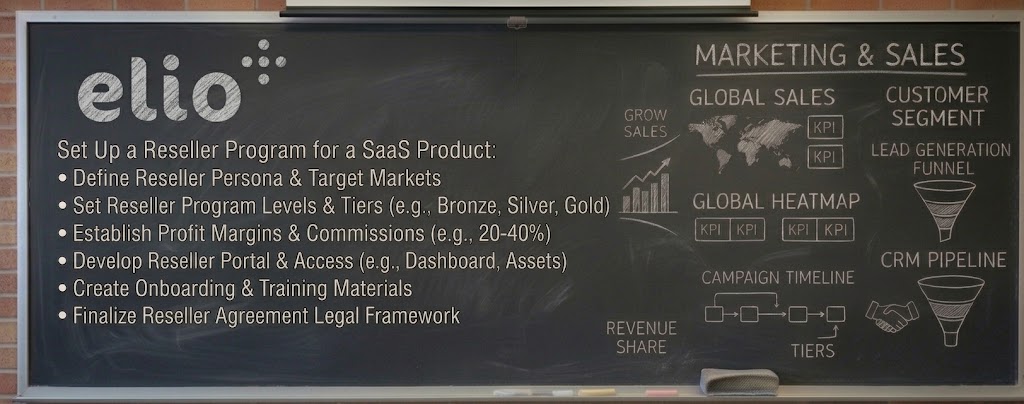
Resellers need to see a clear financial incentive. A flat discount structure is the easiest to explain and manage early on. As the program matures, you can introduce tiers based on revenue commitment, certification, or deal volume.
A common starting structure looks like this:
- Registered partners: 15 to 20 percent discount, no revenue commitment required
- Silver or preferred partners: 25 to 30 percent discount, minimum annual revenue commitment
- Gold or elite partners: 30 to 40 percent discount, higher commitment, co-marketing support included
Avoid making the top tier unattainable for a new partner. If earning a meaningful margin requires committing to a number they can’t guarantee before closing a single deal, they’ll sign up and go quiet.
Deal registration and protection
Deal registration is non-negotiable if you want resellers to invest time in opportunities. Without it, a partner who spends weeks developing a prospect risks losing the deal to your direct team or another partner at a lower price.
The process should be simple: a form or portal where the partner submits a prospect’s company name, contact, and expected close date. You review it, approve or reject within a defined window — 48 to 72 hours is standard — and the approved partner gets protection for a set period, typically 90 days.
Recruiting the Right Resellers
Recruiting resellers is where most early-stage channel programs stall. The instinct is to sign as many partners as possible. The reality is that 20 percent of your partners will drive 80 percent of your channel revenue, so quality matters far more than volume.
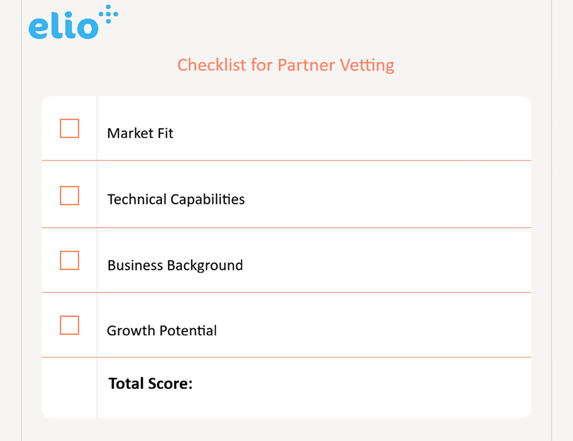
Define your ideal partner profile
Before you start outreach, get clear on what a good reseller actually looks like for your product. Consider:
- Vertical alignment. Does the partner already serve the customers you’re targeting? An MSP focused on healthcare IT is a natural fit for a compliance-heavy SaaS product. A generalist reseller is harder to activate.
- Existing vendor relationships. Partners who already sell complementary products are easier to activate than those who have to build a new practice from scratch.
- Geography. If you’re expanding into a new region, local partners with established customer relationships are worth more than a large national reseller with no local presence.
- Technical capacity. If your product requires integration or configuration, partners need the technical depth to handle it without escalating every implementation to you.
Where to find resellers
The traditional approach — attending industry events, working your personal network, posting a “become a partner” page — works, but slowly.
A faster approach is to use a platform with a verified, searchable directory of channel partners. Elioplus maintains a partner database filterable by location, expertise, and existing vendor relationships, so you can identify MSPs and resellers who already serve your target market rather than cold-prospecting from a generic list. The Partner Recruitment Automation service takes this further, with the Elioplus team actively connecting vendors with potential partners on their behalf.
Inbound recruitment is also worth investing in early. If your website gets meaningful traffic from MSPs or resellers researching solutions for their customers, you can identify those anonymous visitors and convert them into partner leads. Elioplus’s Inbound Partner Recruitment product does exactly this.
Outreach that works
Cold outreach to resellers follows the same rules as any B2B outreach: personalization, relevance, and a clear value proposition.
The messages that land are specific about why you’re reaching out to that partner in particular. Reference their vertical focus, their existing vendor stack, or a customer segment you know they serve. Then make the financial case concrete: what margin can they earn, what’s a realistic deal size, and what does the sales cycle look like.
Avoid the generic “we’re looking to expand our partner network” email. Every vendor sends that. Partners delete it.
Building the Partner Onboarding Experience
Signing a reseller agreement is not the same as activating a reseller. Most programs lose partners in the gap between signature and first sale. A structured onboarding process closes that gap.
The first 30 days
The goal of the first 30 days is to get the partner to their first qualified opportunity — not their first closed deal. That’s a realistic and motivating milestone.
A practical 30-day onboarding sequence:
- Welcome and access provisioning (Day 1). The partner gets access to your partner portal, deal registration system, and any demo or sandbox environment. A personal welcome from their partner manager sets the tone.
- Product training (Days 2 to 7). A structured session covering the product, the ICP, the sales narrative, and common objections. Keep it focused. Partners don’t need to know everything about your product — they need to know enough to qualify opportunities and run a first demo.
- Sales enablement review (Days 7 to 14). Walk through the collateral: pitch deck, one-pager, competitive positioning, case studies. Identify gaps specific to their customer base and fill them.
- Joint prospecting session (Days 14 to 21). Work through their existing customer base together to identify accounts where your product fits. This is often where the first real opportunity surfaces.
- First deal support (Days 21 to 30). For the first one or two deals, be available for joint calls, demos, and pre-sales support. The partner needs to see that you’ll show up before they invest more of their reputation.
The partner portal
A partner portal is the operational backbone of the program. At minimum, it should include deal registration, access to sales and marketing materials, training resources, and a way to submit support requests.
A full-featured PRM platform handles all of this in one place. Elioplus’s PRM software covers partner portals, deal registration, lead distribution, onboarding workflows, and tier management — with a free tier available, which makes it accessible for vendors building their first program without committing to enterprise software costs upfront.
Managing and Growing the Program
Signing and onboarding partners is the beginning, not the end. Channel programs that don’t actively manage partners see activity drop off within six months.
Segment your partners by activity
Not all signed partners are equal. Group them into three buckets:
- Active: Closed at least one deal in the last 90 days or has a registered opportunity in progress
- Engaged: In training or onboarding, or has had a qualifying conversation in the last 30 days
- Inactive: Signed but no activity in 90 days or more
Focus your energy on active and engaged partners. For inactive partners, a re-engagement campaign with a specific offer or a new use case is worth running once. After that, accept that not every signed partner will sell.
Quarterly business reviews
A QBR with your top partners is one of the highest-return activities in channel management. It doesn’t need to be elaborate. Cover what closed last quarter, what’s in the pipeline, what’s working and what isn’t, and what support the partner needs going forward.
Partners who feel like a vendor is invested in their success sell more. QBRs are the most direct way to demonstrate that investment.
Co-marketing and demand generation
Partners are more likely to sell your product if you help them generate demand for it. Co-marketing can be as simple as co-branded email campaigns to their customer base, a joint webinar, or a case study featuring their customer.
For vendors who want to go further, providing partners with market development funds (MDF) tied to specific activities is a proven way to drive pipeline. Keep the approval and reimbursement process simple or partners won’t use it.
Measuring program health
Track these metrics at the program level:
- Partner activation rate: Percentage of signed partners who have closed at least one deal
- Time to first deal: Average days from signature to first closed deal
- Revenue per active partner: Total channel revenue divided by active partners
- Deal registration volume: A leading indicator of pipeline health
- Partner retention: Percentage of active partners still active 12 months later
If your activation rate is below 30 percent, the onboarding process is the problem. If revenue per active partner is declining, the issue is usually margin compression or a lack of sales support.
Common Mistakes That Stall Reseller Programs
Even well-designed programs run into the same set of problems. Knowing them in advance saves time.
Recruiting too broadly. Signing 50 partners in the first quarter feels like progress. It isn’t. Fifty unfocused, undersupported partners will produce less revenue than ten well-chosen, actively managed ones.
Neglecting the partner experience. If deal registration takes a week to approve, the portal is hard to use, or pre-sales support is slow to respond, partners will stop engaging. They have other vendors competing for their attention.
Competing with your own partners. If your direct sales team pursues the same accounts your partners are working, partners will stop sharing pipeline. Clear rules of engagement, enforced consistently, are essential.
Under-investing in enablement. A one-time product training isn’t enough. Partners need ongoing updates as the product evolves, refreshed competitive positioning, and access to someone who can answer questions quickly.
Treating the program as passive. A reseller program is not a set-and-forget motion. It requires active management, regular communication, and continuous improvement. The vendors who win in the channel treat partner success as a core responsibility, not a nice-to-have.
FAQs
What is a reseller program for a SaaS product? A reseller program is a structured arrangement where third-party companies — typically MSPs, VARs, or IT consultants — sell your SaaS product to their customers in exchange for a margin or commission. The vendor provides the product, training, and support; the reseller provides market access and customer relationships.
How much margin should I offer resellers? Most SaaS reseller programs offer between 15 and 40 percent, depending on partner tier, deal size, and the level of services the partner wraps around the product. Entry-level or referral partners typically earn 15 to 20 percent. Committed, high-volume resellers can earn 30 to 40 percent.
How many resellers should I recruit when starting out? Quality matters more than quantity. Starting with 10 to 20 carefully selected partners and investing in their activation is more productive than signing 100 partners and managing them poorly. Aim for a high activation rate before scaling the number of partners.
What’s the difference between a reseller and a referral partner? A referral partner introduces leads and earns a commission when a deal closes, but the vendor handles the sale and customer contract. A reseller transacts directly with the customer, typically bundling the software with their own services and billing the customer themselves.
Do I need a PRM platform to run a reseller program? Not on day one, but you’ll need one quickly. A spreadsheet and email can manage five partners. At 20 or more, you need a system for deal registration, onboarding, collateral management, and performance tracking. Elioplus offers a free PRM tier that lets you start without a large upfront commitment.
How long does it take to see revenue from a reseller program? Most programs see their first partner-sourced revenue within three to six months of launch, assuming active recruitment and structured onboarding. A meaningful channel contribution — in the range of 20 to 30 percent of new ARR — typically takes 12 to 18 months to build.
How do I find the right resellers for my SaaS product? Start by defining your ideal partner profile based on vertical, geography, and existing vendor relationships. Then combine inbound (a “become a partner” page, content targeting partner audiences) with outbound (direct outreach, partner directories, recruitment platforms). A verified partner database like the one available through Elioplus lets you filter by location, expertise, and existing partnerships — significantly faster than building a prospect list manually.
Start Building
A reseller program that works comes down to three things: the right partners, a clear commercial model, and consistent support. None of those require a large team or an enterprise budget to get right.
The vendors who build successful channels are the ones who treat partner recruitment as a systematic process rather than a networking exercise — and who invest in the tools and infrastructure that make partners productive from day one. If you’re ready to move from a spreadsheet-based partner list to a real program, Elioplus is worth a look